
Why your stress response matters—and how your daily coffee ritual can support a calmer, lower-inflammation body.
Chronic stress isn’t just “feeling overwhelmed.” It triggers a hormonal cascade—mainly involving cortisol, adrenaline, and insulin—that can quietly raise inflammation levels in your body over time. And since inflammation is at the root of issues like fatigue, joint stiffness, brain fog, and poor sleep, understanding this connection matters.
Here’s how stress, hormones, and inflammation are tied together—and how small daily habits (like the coffee you choose) can help support your body instead of working against it.
1. Stress Activates Cortisol—And Cortisol Drives Inflammation Over Time
Short-term cortisol is healthy: it’s your body's built-in survival mechanism.
But when cortisol stays elevated for weeks or months, research shows it can:
-
increase systemic inflammation
-
disrupt immune balance
-
worsen blood sugar swings
-
interfere with restorative sleep
-
amplify feelings of anxiety
When your body thinks it’s constantly “under threat,” it shifts into a pro-inflammatory mode. This is why people under long-term stress often feel achy, puffy, tired, or wired.
2. Stress Disrupts Hormones That Regulate Inflammation
Cortisol doesn’t act alone. Chronic stress throws off other hormones that influence inflammation:
• Insulin
Stress makes your liver release glucose for energy. Over time, this can lead to insulin resistance—which fuels inflammation.
• Estrogen & Progesterone
In women, stress disrupts the delicate estrogen/progesterone balance.
Low progesterone + erratic estrogen = more inflammatory signaling, worse PMS, and even more cravings + fatigue.
• Melatonin
Cortisol and melatonin operate on a seesaw. High evening cortisol → low melatonin → poor sleep → higher inflammation.
This is why stressed bodies often struggle with inflammation from multiple angles.
3. Stress Also Impacts the Gut—Another Inflammation Trigger
High stress → weaker digestion → changes in gut bacteria → more inflammatory molecules entering the bloodstream.
It’s not “in your head.” Stress physiologically alters:
-
gut motility
-
nutrient absorption
-
microbiome balance
And a disrupted gut is one of the biggest drivers of chronic low-grade inflammation.
4. Why Your Coffee Choice Matters for Stress & Inflammation
Coffee itself isn’t the problem—the quality is.
Many people drink coffee as their first act in a stressed state:
-
empty stomach
-
poor sleep
-
high cortisol mornings
-
acidic or low-quality beans
This combination can create more jitteriness, energy crashes, and inflammatory responses.
Here’s where clean, anti-inflammatory coffee matters:
✔ Organic coffee → fewer pesticides, fewer contaminants that trigger inflammation
✔ Ingredients like cacao, turmeric, cinnamon, ginger, chaga → known for antioxidant and anti-inflammatory properties
✔ Lower-to-medium roast acidity → easier on the gut
✔ A smoother caffeine profile → less cortisol spiking, less stress response
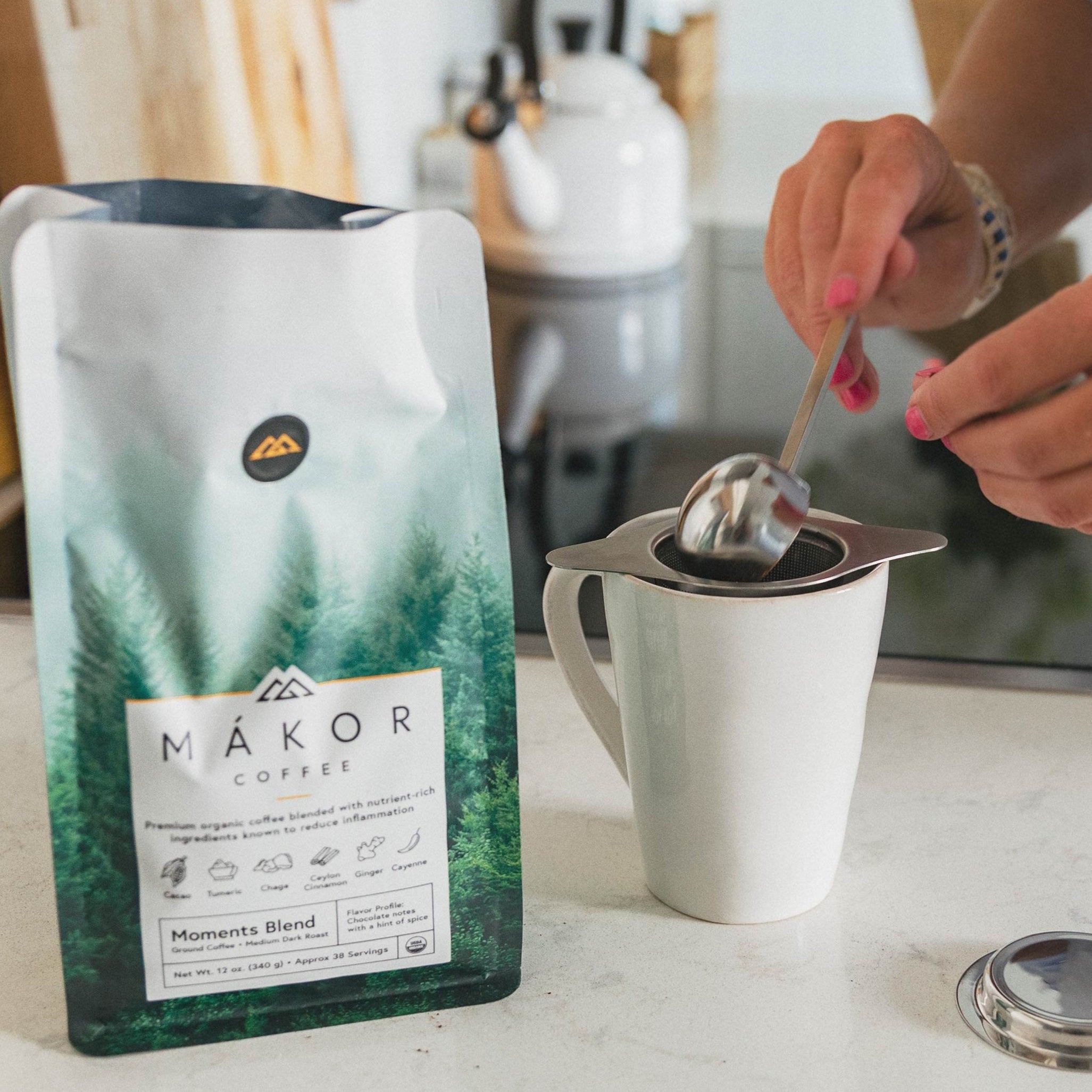
Màkor Coffee was designed specifically to address this intersection:
A morning ritual that supports calm, steady energy instead of adding to stress-driven inflammation.
You’re not promising medical outcomes, but you're positioning the coffee as the cleaner, more supportive choice for people trying to lower inflammation.
5. Small Daily Rituals Can Quiet the Stress–Hormone–Inflammation Loop
The body is remarkably responsive to consistent habits.
Even simple daily practices help dial cortisol down:
-
sunlight within 30 minutes of waking
-
protein + fiber in the morning
-
a calmer, cleaner coffee ritual
-
2–3 minutes of slow breathing
-
walking after meals
-
consistent bedtime
-
limiting doom-scrolling at night
You don’t need a perfect wellness routine—you just need the anchor habits that move your hormones in the right direction.
And since coffee is a ritual people do without fail, upgrading that ritual has an outsized impact.
Chronic stress disrupts hormones like cortisol, insulin, estrogen, and melatonin, all of which are directly linked to inflammation. Supporting your body with cleaner habits—including choosing a clean, anti-inflammatory coffee—is one of the simplest ways to lower the daily inflammation load and create more steady energy. If you’re trying to reduce inflammation, a morning ritual built around high-quality, functional coffee can be a meaningful step.