
Your morning coffee is already doing a lot. These five add-ins make it work even harder.
Coffee itself is rich in antioxidants and has been linked to reduced inflammatory markers in multiple studies. But if you want to take your cup to the next level, a few well-chosen ingredients can turn your daily brew into a genuinely functional anti-inflammatory drink — without sacrificing flavor.
Here are the five best things to add to your coffee for inflammation, why they work, and how to use them.
1. Turmeric
Turmeric is the gold standard of anti-inflammatory add-ins. Its active compound, curcumin, has been studied extensively for its ability to inhibit inflammatory pathways at the molecular level — comparable in some studies to over-the-counter anti-inflammatories, without the side effects.
→ Read our full guide to turmeric in coffee
2. Ginger
Ginger contains gingerols and shogaols — bioactive compounds with potent anti-inflammatory and antioxidant effects. It also supports digestion and helps regulate blood sugar, which smooths out the caffeine curve and reduces the mid-morning crash.
How to use it: Add ⅛–¼ tsp ground ginger, or grate fresh ginger directly into your brew. It pairs especially well with a smooth, balanced coffee.
→ Read our full guide to ginger in coffee
3. Cinnamon
Cinnamon is one of the most evidence-backed spices for reducing inflammation. Studies show it can lower CRP (a key inflammatory marker), improve insulin sensitivity, and reduce fasting blood sugar — all from as little as ½ tsp per day. It also adds natural sweetness, so you can cut back on sugar without missing it.
How to use it: Add ¼–½ tsp Ceylon cinnamon to your grounds before brewing, or stir it into your finished cup. Ceylon is preferred over Cassia for daily use.
→ Read our full guide to cinnamon in coffee
4. Cayenne Pepper
Cayenne contains capsaicin, a compound with well-documented anti-inflammatory properties. It also boosts circulation and metabolism, and can help suppress appetite — making it one of the most multi-functional add-ins on this list. A little goes a long way.
How to use it: Start with just a pinch (⅛ tsp) and work up from there. The heat should be a warm finish, not a punch in the face.
→ Read our full guide to cayenne in coffee
5. Raw Cacao
Raw cacao is one of the highest antioxidant foods on the planet, and it’s loaded with magnesium — a mineral most people are deficient in. Its flavanols support cardiovascular health and reduce oxidative stress, while theobromine provides a gentler, longer-lasting energy lift alongside caffeine.
How to use it: Add 1 tbsp raw cacao powder (not cocoa — the processing matters) to your brewed coffee. Pair with oat milk for a functional mocha that actually earns the name.
→ Read our full guide to cacao in coffee
The Best Coffee Base for All of These
Every one of these add-ins performs best with a coffee that has a smooth, balanced body and low acidity. Harsh or thin coffees clash with spices and earthy flavors; a well-crafted roast lets them shine.
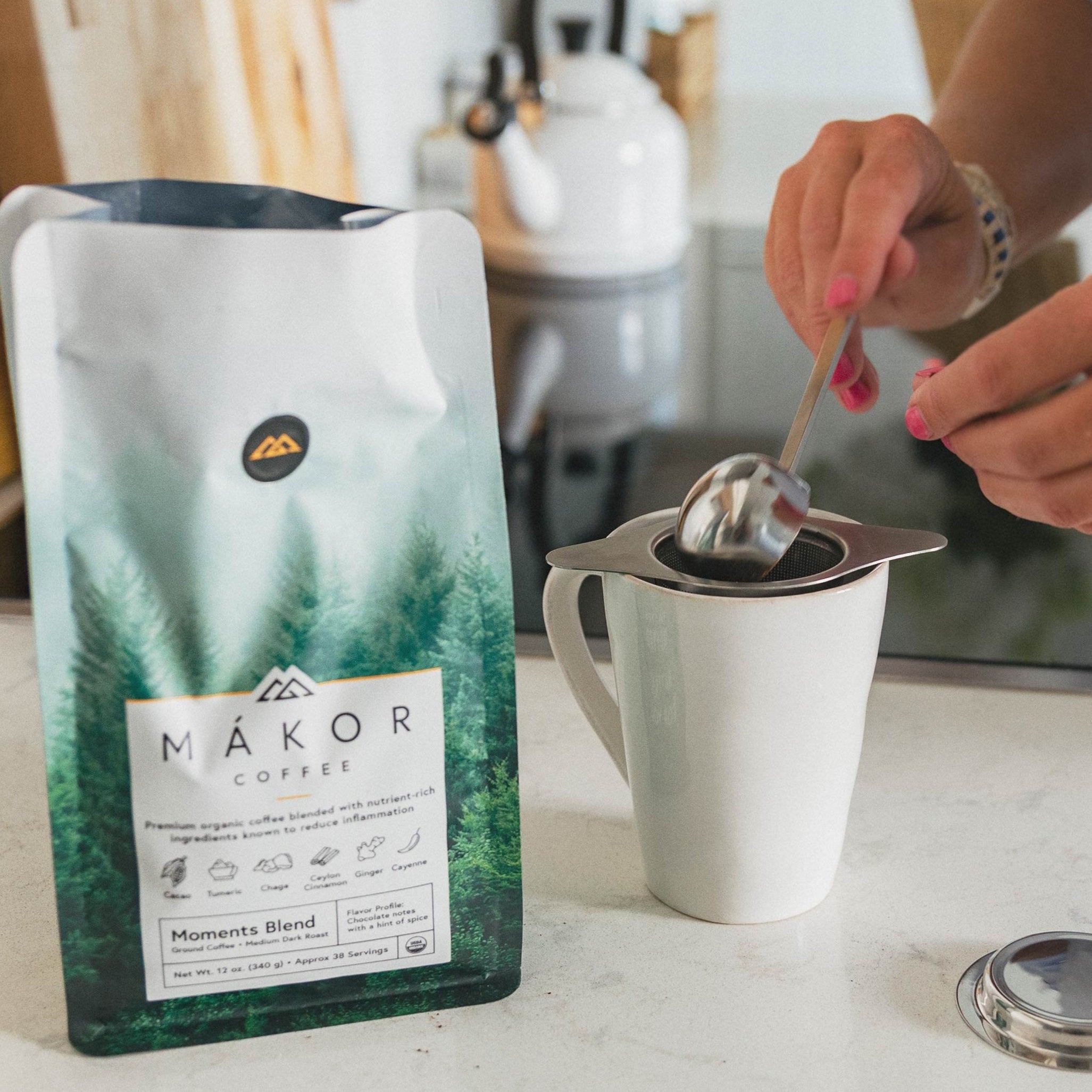
The Mákor Moments Blend was designed for exactly this kind of intentional brewing. Its smooth profile, natural chocolate undertones, and low acidity make it the ideal base whether you’re adding turmeric, ginger, cinnamon, cayenne, cacao — or all five.
The Bottom Line
You don’t need to overhaul your morning routine to reduce inflammation. Start with one add-in, dial in the amount, and build from there. Your coffee is already a daily habit — these ingredients just make it work harder for you.
Start with Moments Blend and pick one ingredient to try this week. Your body will notice.